
Rice paper in a waffle iron: the one trend that earned it
Most food trends are a format hunting for a reason. This one is a technique. Rice paper under heat and pressure does something no other wrapper does.

Somebody dumps a block of cream cheese in a pan, tips in a bag of shredded cheddar and a jar of salsa, stirs, and captions it "42g protein girl dinner." Four million views. The 42 came from nowhere. Add the ingredients up and it's 26, and about 70% of the calories are fat.
We waded through a lot of that last year. Our favorite was a wrap advertising 45g of protein that came to nineteen when we totalled the actual ingredient list. Somebody had made up a number, somebody else had reposted it, and by the fourth repost it was 52.
So when rice paper in a waffle iron started turning up everywhere, we rolled our eyes and assumed it was more of the same.
Then we tried it. It's one of about three new home cooking techniques we've run into that changes what you can make, and it's been explained badly everywhere, so here's the version with the reasons in it.
Why the waffle iron and not a pan
Rice paper is starch and water. That's the whole ingredient list, and it's why a round weighs four grams and costs you almost nothing.
Wet it and it goes soft and tacky, the way it does for summer rolls. Put that soft round in an oiled pan and you get something grim: it sticks, turns chewy, and hangs onto water like a dishcloth. Most people try the pan first, get exactly that, and write the whole thing off.
The iron works differently. Heat hits both sides at once, the lid presses down, and the steam has nowhere to go except out the sides. The starch gelatinizes and then keeps drying under pressure, and what comes out isn't fried or browned so much as vitrified. Thin, semi-transparent, stiff, and it shatters when you bite it. Closer to a prawn cracker than to bread.
You can't get there in a pan, an air fryer, or an oven. None of them press, and the press is the whole mechanism.
Three rules
Two rounds. Not one, not three. One tears as soon as the filling shifts and you've got a leaking pocket fused to your iron. Three overshoots: the outside crisps, the middle stays soft, and you're chewing a leathery seam. Two rounds stacked while damp bond into one sheet.
Wet them, don't soak them. One pass under the tap each side. Rice paper keeps softening for another thirty seconds after it leaves the water, so a round that feels a bit stiff when you put it down will be right by the time you've filled it. If it's floppy in your hands it's already too wet.
Press the edges before the iron does. Fold it over, run your fingers round the perimeter, flatten it. Filling that creeps to the edge stops the layers bonding, and a pocket that bursts under the lid empties itself into the grooves, where it welds.
The mistake everybody makes once
Wet filling.
Sauce turns the pocket into a little steam oven. The wrapper goes soft and stays soft, and you stand there adding minutes waiting for a crunch that's never coming. Then you blame the technique.
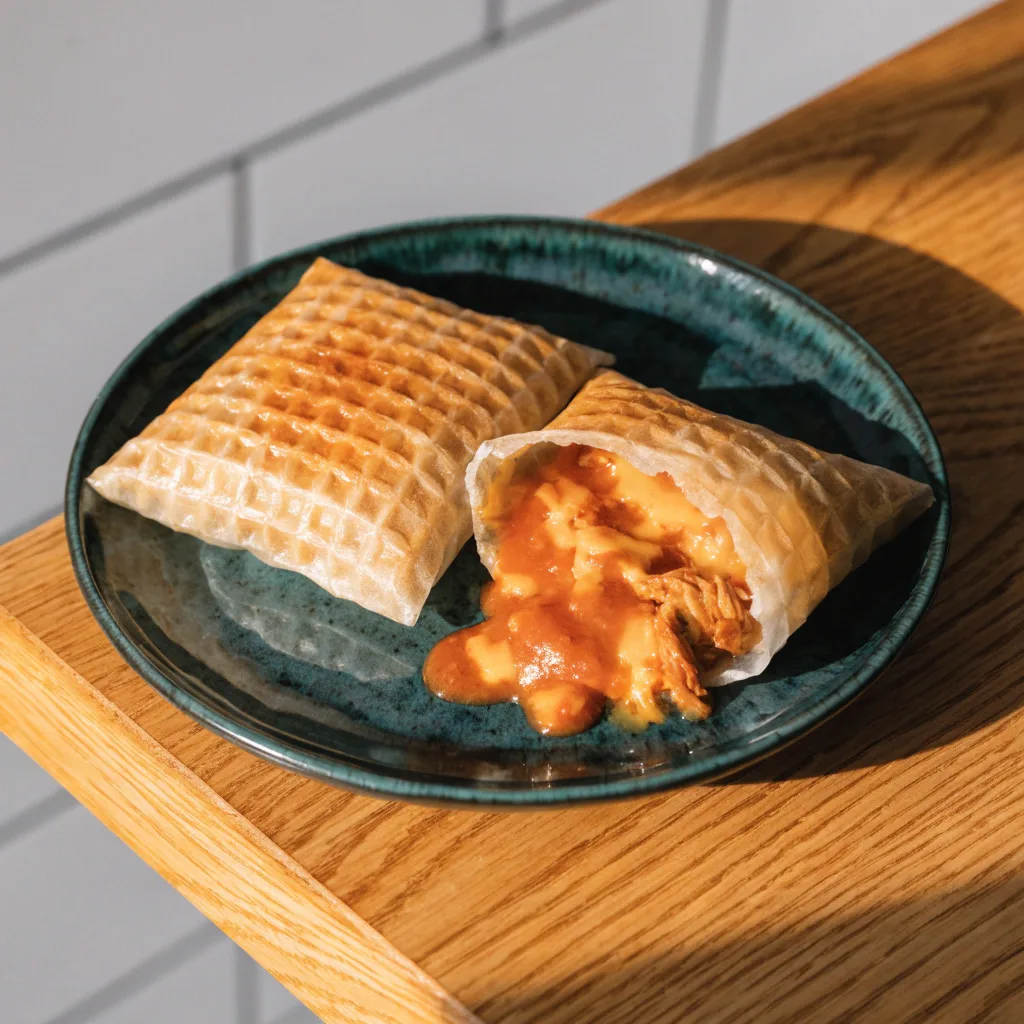
Buffalo chicken is the usual casualty. Straight from the bowl it's far too wet. Stir it through a spoonful of cream cheese or thick Greek yogurt first and it binds, holds its shape, and crisps like it should. Same fix for anything saucy: bind it, don't pour it.
Cheese looks like it should cause trouble and doesn't, because it starts solid and loses its water sideways as steam. Vegetables are the sneaky ones. Raw cabbage and mushrooms both throw off far more liquid than you'd expect once the lid comes down, so cook them off and let them cool first.
What it buys you
A big flour tortilla runs about 200 calories and maybe 3g of protein, none of it doing you any favors. Two rounds of rice paper are around 60 calories and no protein worth counting.
Neither wrapper feeds you. One just charges you three times more for the privilege.
Which means the wrapper stops showing up in the maths. Everything in the macro column comes from what you put inside, so a pocket with a decent amount of chicken and cheese in it lands near 27g of protein and still eats like something crisp and slightly bad for you. That's a good trade, and you get it from a texture trick rather than a swap that tastes like punishment.
Trends hand you a format. Techniques change what the format costs.
Start here
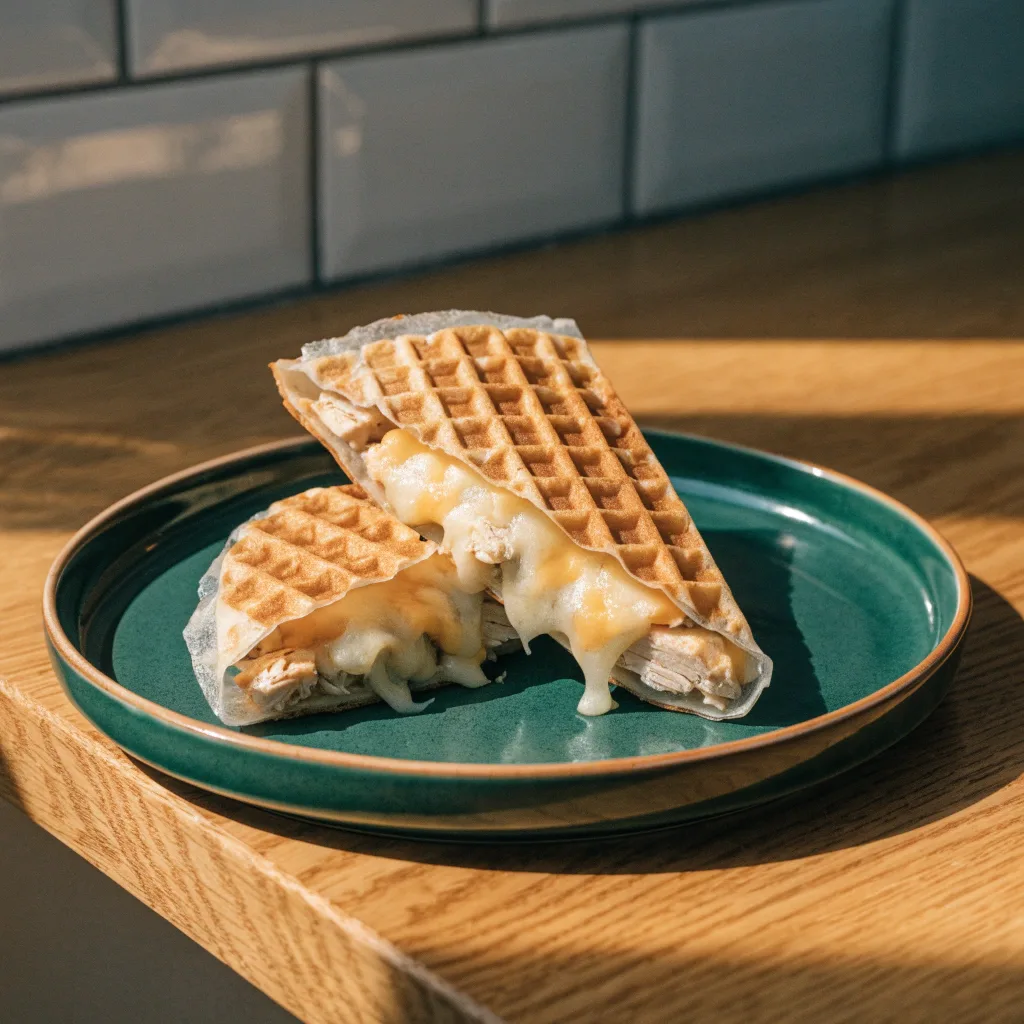
Go with the chicken and cheese quesadilla first. The cheese binds everything, the filling's dry to begin with, and a slightly wonky first one still tastes great.
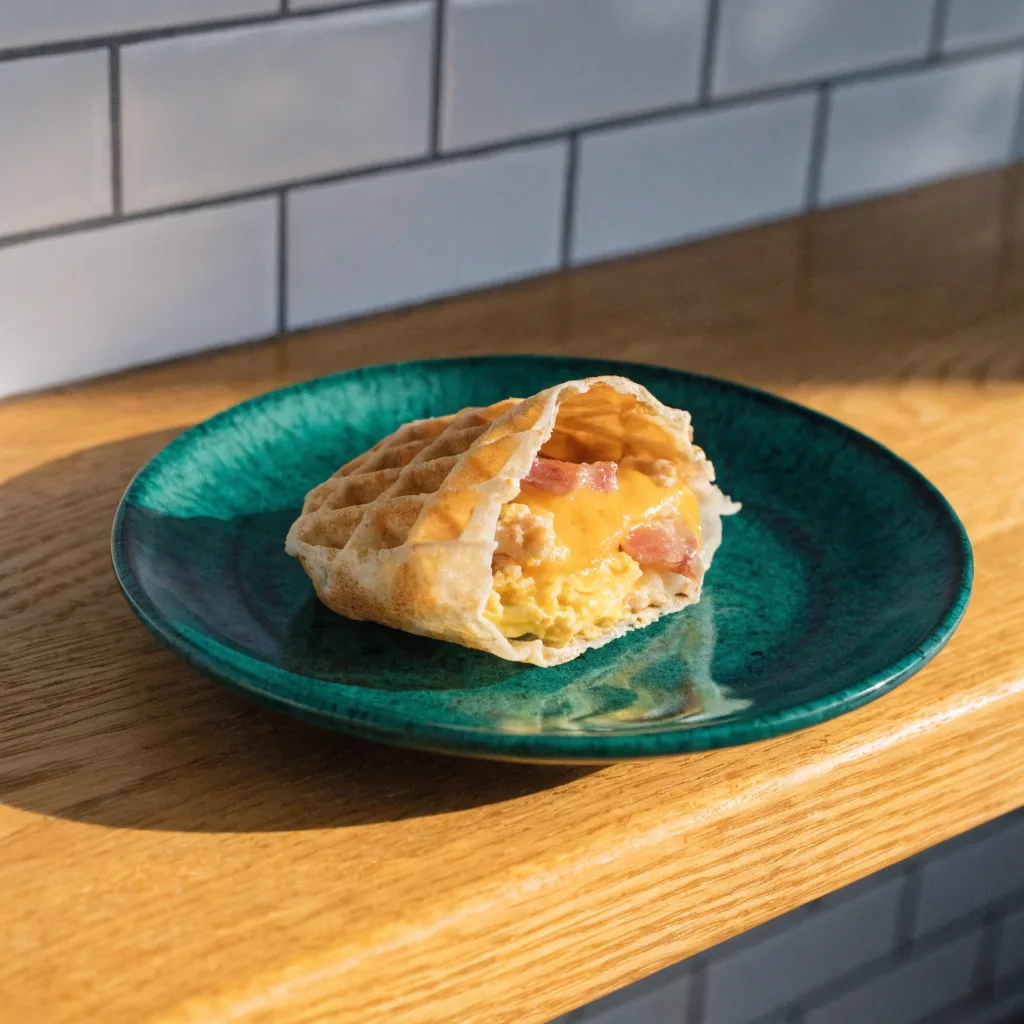
Then the buffalo pockets, which teach you the moisture lesson the hard way, and the egg and turkey bacon waffle, which will quietly ruin normal breakfast for you.
For what it's worth, our first attempt cemented itself to the iron and came off in pieces with a wooden spoon. The second was perfect. That's the learning curve, and it's about four minutes long.
Recipes in this post
More from the blog
The Protein Drop #8: Keep the sauce out of the box
A peanut sauce poured over on Sunday has been absorbed by Tuesday. In a tub of its own it is still a sauce on Thursday, and a teaspoon of hot water brings it back.
The Protein Drop #7: A lunch that never goes near a microwave
Most prep boxes get worse every day. A jar of tuna, white beans and lemon dressing gets better, and it is ready the second you open it.
What to put on top
A Nutella alternative with six grams of protein in two tablespoons, where the original has about one. Plus five more things that make a bowl better instead of just bigger.
The Protein Drop #6: Most of the glaze goes on after the oven
Teriyaki that goes into the oven caramelizes away by Wednesday. Brush on a third, keep the rest cold, and spoon it over the salmon in the box.
Comments
Sign in to leave a comment. Free for all members.
No comments yet. Be the first.